

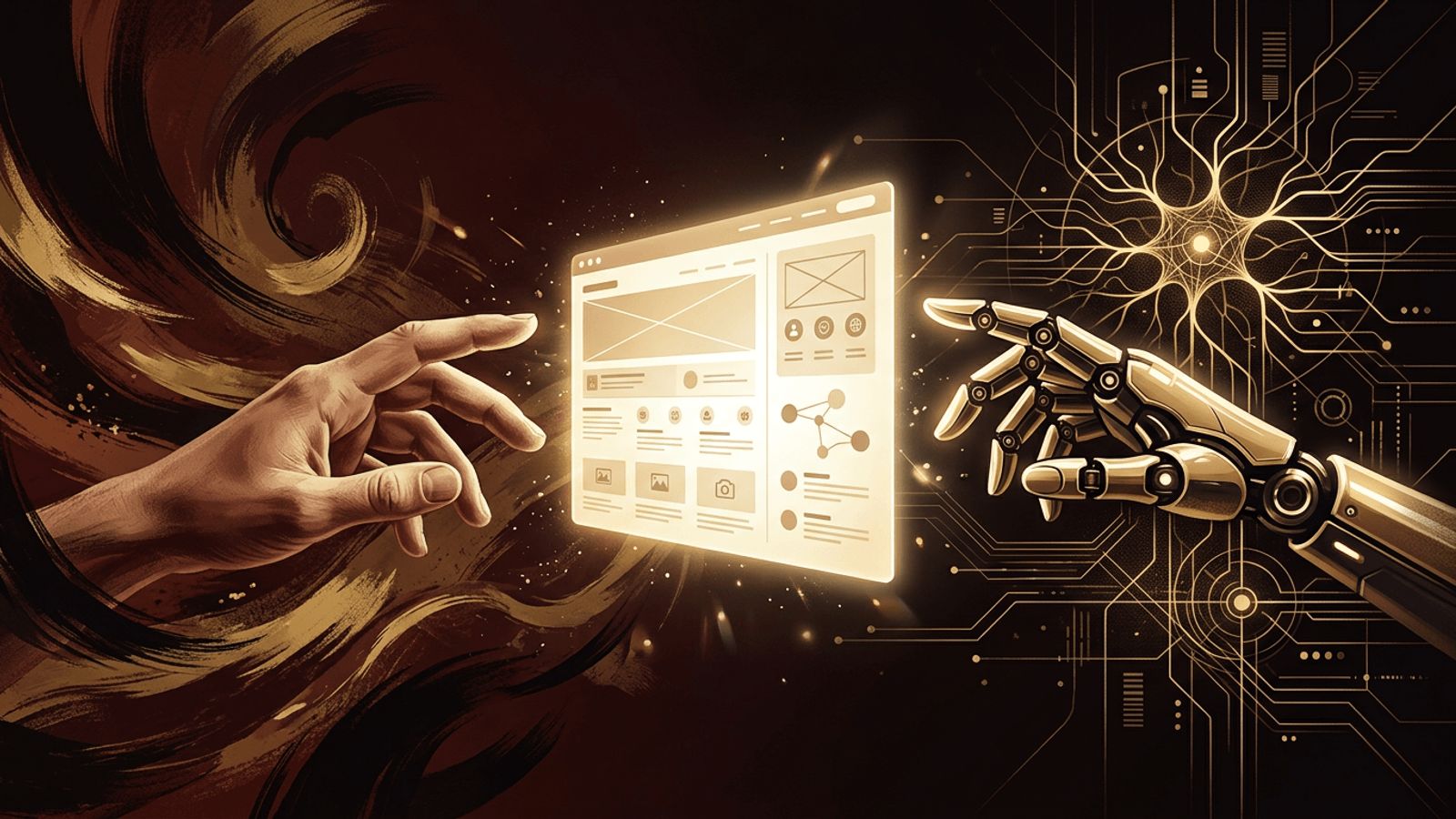
Artificial intelligence has advanced at a remarkable pace. Today, AI tools can generate website layouts from a text prompt, create custom imagery, suggest colour palettes, write copy, and even produce working front-end code. For web designers, these developments raise an understandable concern: are web designers going to be replaced by AI? The short answer is that AI will replace certain tasks, not the profession itself. Designers who learn to work alongside AI will become more productive and valuable, while those who ignore it may struggle. In this article, we explore AI's real capabilities, its limitations, and how designers can future-proof their careers.
Human Creativity Meets Smart Technology at AAMAX.CO
The most effective approach to modern web design combines human insight with the speed of new tools. AAMAX.CO is a full service digital marketing company providing web development, digital marketing, and SEO services worldwide. Their team blends creative expertise with modern technology to deliver websites that are both innovative and strategically sound. Businesses that want AI-powered features, such as smart search or personalised content, can take advantage of their web application development service, while still benefiting from experienced designers who ensure every experience feels human and on-brand.
What AI Can Do in Web Design Today
- Generate layouts: AI site builders can create page structures and sections from a brief description.
- Create images and illustrations: Image generation models produce custom visuals in seconds.
- Write content: AI can draft headlines, product descriptions, and blog posts.
- Suggest design elements: Tools recommend fonts, colour schemes, and component variations.
- Produce code: AI can convert designs or prompts into HTML, CSS, and framework components.
- Analyse user behaviour: AI-powered analytics identify patterns and suggest improvements.
- Personalise experiences: AI can tailor content to individual visitors in real time.
What AI Cannot Do (Yet)
Understand Business Context
AI does not truly understand a company's history, values, market position, or long-term goals. Designers translate these nuances into meaningful design decisions.
Empathise with Users
Great design is rooted in empathy. Designers conduct interviews, observe behaviour, and understand emotions in ways AI cannot replicate.
Create Truly Original Brands
AI generates outputs based on patterns in existing data, which can lead to generic or derivative results. Distinctive, memorable brand identities still require human creativity.
Make Ethical and Inclusive Decisions
Designers must consider accessibility, inclusivity, privacy, and ethical implications. AI may unintentionally reproduce biases or overlook the needs of underrepresented users.
Manage Stakeholders
Design projects involve negotiation, presentation, and collaboration with clients and teams. These interpersonal skills remain distinctly human.
How AI Is Changing the Designer's Workflow
Rather than replacing designers, AI is transforming how they work:
- Faster exploration: Designers can generate dozens of concepts quickly, then refine the best ones.
- Reduced repetitive work: Tasks like resizing assets, creating variations, and writing placeholder content are automated.
- Rapid prototyping: AI can turn sketches into interactive prototypes for faster testing.
- Data-informed design: AI analytics help designers understand what works and why.
- Closer design-to-code handoff: AI-generated code narrows the gap between design and development.
The result is that designers can spend more time on strategy, research, and creativity, the areas where they add the most value.
Which Design Roles Are Most Affected?
Roles focused primarily on production, such as creating simple templates, banner variations, or basic landing pages, are the most likely to be automated. Roles involving UX research, product strategy, design leadership, and complex interaction design are far less vulnerable. Designers who position themselves as strategic problem solvers rather than layout producers will be best placed.
How Web Designers Can Future-Proof Their Careers
- Learn AI tools: Become proficient with AI design, image, and prototyping tools.
- Develop strategic skills: Understand business goals, marketing, and conversion optimisation.
- Deepen UX expertise: Invest in research, testing, and information architecture skills.
- Specialise: Focus on industries or problem areas where deep knowledge matters.
- Understand code: Knowing front-end basics helps designers guide AI-generated code.
- Champion accessibility: Expertise in inclusive design is increasingly required and valued.
- Build a strong portfolio: Showcase your thinking process, not just final visuals.
What This Means for Businesses
For businesses, AI offers opportunities to create websites faster and more affordably. However, relying solely on AI-generated designs can result in generic experiences that fail to differentiate or convert. The best results come from experienced designers using AI as a tool, combining efficiency with strategic insight and creative originality.
The Rise of the AI-Augmented Designer
A new type of professional is emerging: the AI-augmented designer. These designers use AI to generate early concepts, test variations at scale, and automate production tasks, while applying their own judgement to select and refine the best ideas. They write effective prompts, understand the strengths and weaknesses of different tools, and verify outputs for accuracy, accessibility, and brand alignment. Because they can deliver more work in less time without sacrificing quality, they are often more valuable to employers and clients than ever before. Rather than competing with AI, these designers treat it as a creative partner that amplifies their skills.
Conclusion
Are web designers going to be replaced by AI? Not entirely. AI will automate many routine tasks and change how designers work, but it cannot replace human empathy, strategic thinking, creativity, and ethical judgement. The future belongs to designers who embrace AI as a powerful assistant and focus on the high-value work that machines cannot do. For businesses, partnering with design teams that skilfully blend human expertise and AI capabilities offers the best of both worlds.
