

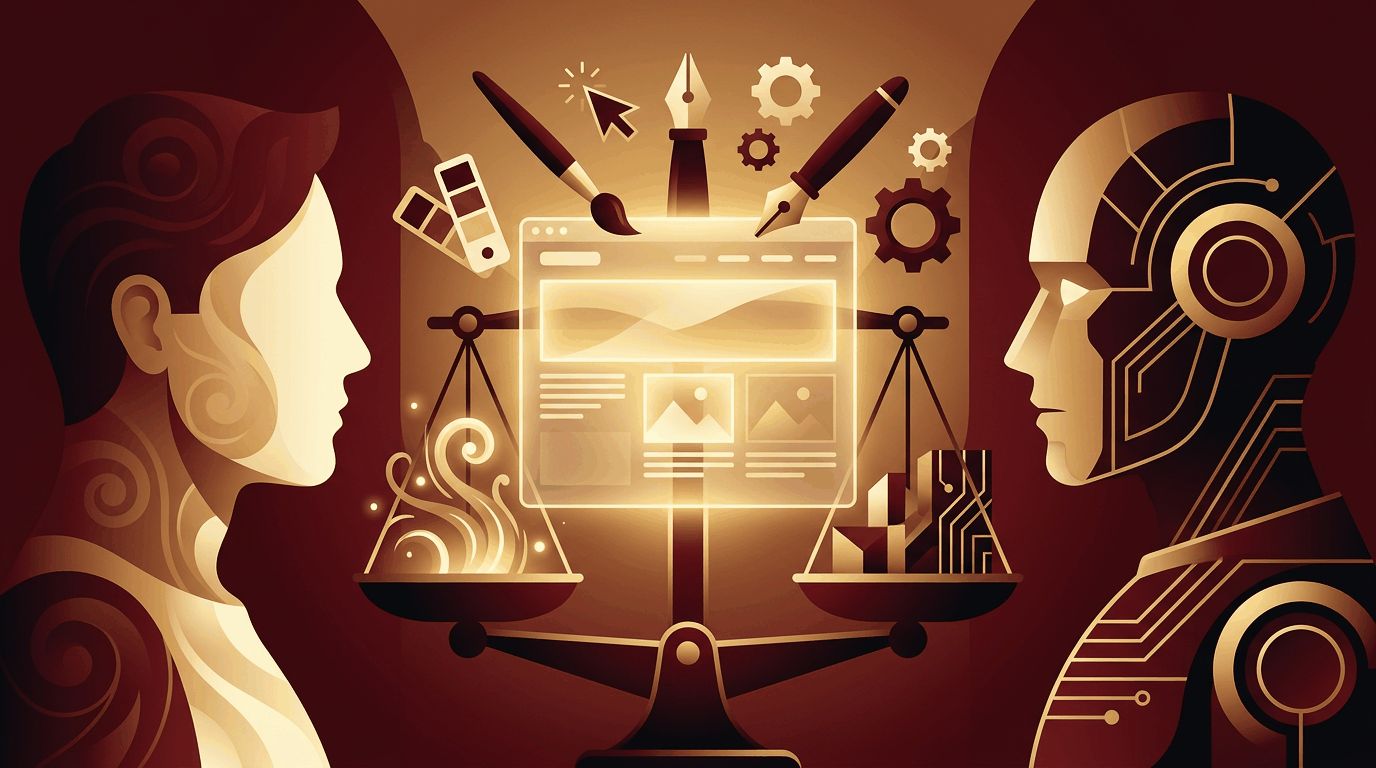
AI website builders promise to create a complete website in minutes. Type a few sentences about your business, and an AI tool generates pages, images, text, and a color scheme almost instantly. It is an impressive experience, and it naturally leads many business owners to ask: can AI replace web designers? If software can produce a website this quickly and cheaply, is there still a reason to hire a professional? To answer that question fairly, we need to look beyond the speed of generation and examine what actually makes a website successful. In this article, we compare AI-generated websites with professionally designed ones and explain where each approach fits.
Why Businesses Choose AAMAX.CO Over Purely Automated Solutions
Businesses that want their websites to drive real results often need more than an automated template. AAMAX.CO is a full-service digital marketing company offering web development, digital marketing, and SEO services worldwide. Their designers combine creative expertise with strategic thinking, crafting websites tailored to each client's audience, brand, and conversion goals. While they embrace modern tools to work efficiently, they apply human judgment to every layout, message, and interaction. The result is a website that feels authentic and performs well, something automated generators struggle to achieve on their own.
What AI Website Builders Do Well
To be fair, AI-powered design tools have real strengths:
- Speed: They can produce a functional draft in minutes.
- Low cost: Many tools offer affordable monthly plans.
- Ease of use: No design or coding knowledge is required.
- Rapid iteration: You can generate multiple variations quickly.
- Helpful starting points: They can inspire ideas or validate a concept.
For a hobby project, a temporary event page, or a very early-stage startup testing an idea, these benefits may be enough.
The Limitations of AI-Generated Design
It Does Not Know Your Customers
A successful website is built around the needs, fears, and motivations of a specific audience. Professional designers research your customers, study competitors, and map out the journey a visitor takes from first click to conversion. AI tools rely on the limited information you provide in a prompt and produce general-purpose structures that may not address what your customers actually care about.
Designs Tend to Look Similar
Because AI models learn from patterns in existing websites, their output tends to converge on familiar layouts and visual styles. Your site might look clean but indistinguishable from many others in your industry. Differentiation is a major factor in brand recall and trust, and generic design undermines it.
Strategy Is Missing
Where should your most important call to action appear? Which testimonials should be placed near your pricing? How should content be organized to support both users and search engines? These strategic decisions shape conversion rates, and they require understanding of business goals and human behavior that AI tools do not reliably provide.
Quality and Accessibility Gaps
AI-generated pages can include low-contrast text, missing alt attributes, confusing heading structures, and inconsistent spacing. These issues affect accessibility, usability, and SEO. Without an expert reviewing the output, problems often go unnoticed until they cost you visitors or create compliance risk.
Limited Customization and Scalability
AI builders work well within their own templates and platforms, but complex requirements such as custom integrations, advanced e-commerce features, membership areas, or unique interactive elements often push beyond their capabilities. Businesses may find themselves locked into a platform that cannot grow with them.
What Professional Web Designers Provide
Professional designers deliver value across the entire lifecycle of a website:
- Discovery and research: Understanding your business, audience, and competitors.
- Information architecture: Organizing content logically for users and search engines.
- Unique visual identity: Creating a look that reflects your brand and stands out.
- User experience design: Crafting intuitive journeys that reduce friction.
- Conversion optimization: Placing content and calls to action strategically.
- Accessibility and compliance: Ensuring the site works for everyone.
- Collaboration and revisions: Refining the design based on your feedback.
AI as a Tool, Not a Replacement
The most productive way to view AI is as a powerful assistant. Many professional designers already use AI to generate initial concepts, create image assets, draft placeholder copy, or explore alternative layouts. This speeds up their work and allows them to dedicate more time to strategy, refinement, and creative problem-solving. In this sense, AI makes good designers even better rather than making them unnecessary.
Cost Versus Value
An AI-generated website is cheaper upfront, but cost should be measured against results. If a professionally designed website converts even slightly better, the additional revenue can quickly outweigh the design investment. A website that builds trust, ranks well in search, and guides visitors toward action is an asset that pays for itself over time. Investing in custom website design is ultimately an investment in growth.
When AI Alone Might Be Enough
- Personal portfolios or hobby sites with minimal business stakes.
- Short-term event or campaign pages.
- Early concept validation before committing to a full build.
- Internal pages that are not customer-facing.
When You Should Hire a Designer
- Your website is a primary source of leads or sales.
- You operate in a competitive market where differentiation matters.
- You need custom functionality or integrations.
- Accessibility, compliance, and SEO are priorities.
- You are building a long-term brand.
Conclusion
Can AI replace web designers? AI can replace some routine design tasks and serve simple needs, but it cannot replace the strategic thinking, creativity, empathy, and accountability of a skilled professional. For businesses that rely on their website to attract and convert customers, human-led design supported by modern tools remains the most effective approach. Use AI where it saves time, and rely on experienced designers where it matters most.
