

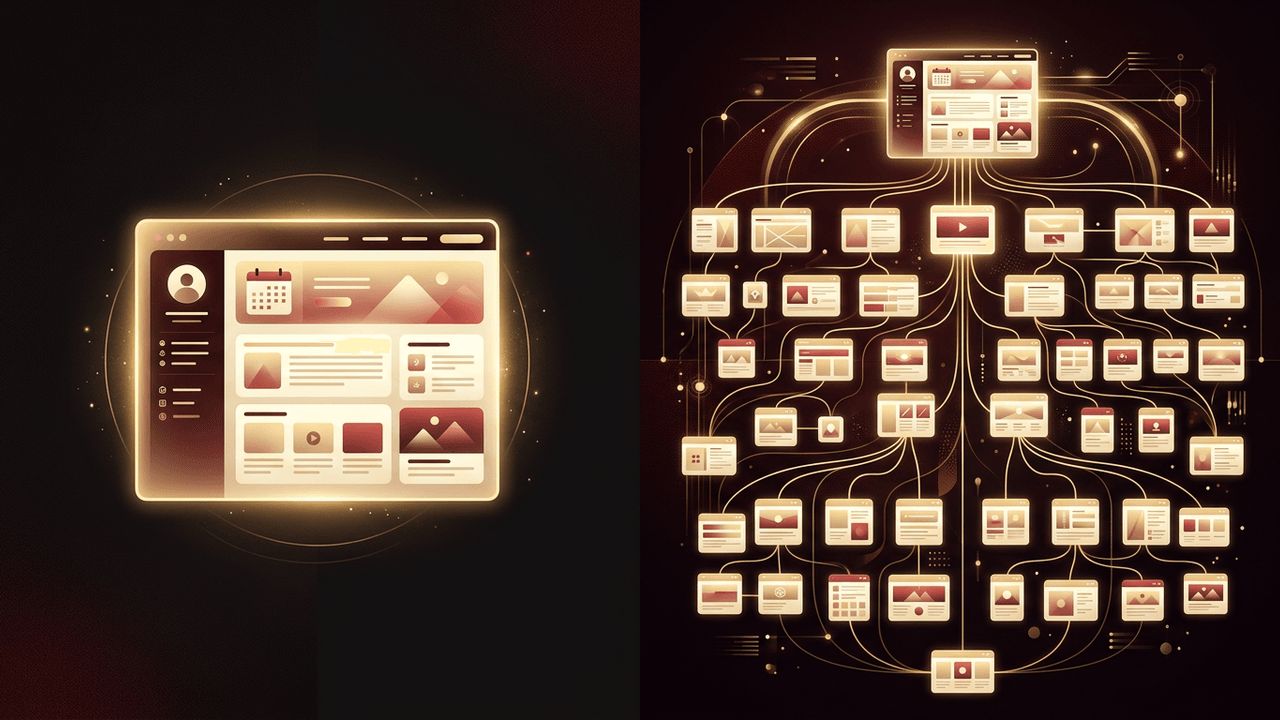
In everyday conversation, people often say "web page" and "website" as if they mean the same thing. While the two are closely related, they are not identical. Understanding the difference between a web page and a website helps business owners communicate clearly with designers, plan content effectively, and make smarter decisions about SEO and user experience. In this article, we explain both concepts in plain language, compare them side by side, and show why the distinction matters for anyone building an online presence.
How AAMAX.CO Helps Businesses Plan Both Pages and Websites
Great websites are built from great pages, and great pages only work when they fit into a well-organized website. AAMAX.CO is a full service digital marketing company that offers web development, digital marketing, and SEO services worldwide. They help businesses map out site structures, design individual pages with clear goals, and connect everything through intuitive navigation. By thinking at both the page level and the site level, they create online experiences that are easy to use and easy for search engines to understand.
What Is a Web Page?
A web page is a single document on the internet that you view in a browser. It is typically written in HTML, styled with CSS, and often enhanced with JavaScript. Every web page has its own unique URL, which is the address you type or click to reach it. When you read a blog article, view a product, or fill out a contact form, you are looking at a web page.
A web page can contain text, images, videos, links, buttons, and interactive elements. It can be static, meaning its content stays the same for every visitor, or dynamic, meaning its content is generated on the fly based on user actions, databases, or personalization.
What Is a Website?
A website is a collection of related web pages grouped under a single domain name and connected through navigation. For example, a company's website might include a homepage, an About page, service pages, a blog, and a contact page. Together, these pages form a unified experience with consistent branding, design, and purpose.
Websites are hosted on servers and accessed through a domain name such as example.com. The homepage usually serves as the entry point, guiding visitors to other pages through menus, links, and calls to action.
A Simple Analogy
Think of a website as a book and each web page as a page in that book. The book has a title, a cover, a table of contents, and chapters that work together. Each page contains specific content, but it only makes full sense in the context of the book. Similarly, a single web page delivers specific information, while the website ties everything together into a meaningful whole.
Key Differences at a Glance
Scope: A web page is a single document. A website is a collection of documents.
Address: A web page has a unique URL such as example.com/about. A website is identified by its domain, such as example.com.
Purpose: A web page typically focuses on one topic or goal, like describing a service or selling a product. A website represents an entire brand, organization, or project with multiple goals.
Navigation: A web page may link to other pages, but a website includes a full navigation system, such as menus, footers, and internal links, connecting all its pages.
Development effort: Creating a single page is relatively quick. Building a complete website involves planning structure, designing templates, developing functionality, writing content, and setting up hosting.
Can a Website Have Just One Page?
Yes. Single-page websites, often called one-page sites, put all content on one long scrolling page. They are popular for event announcements, portfolios, product launches, and small businesses with simple offerings. Even in this case, the website includes more than the page itself: the domain, hosting, branding, and any supporting files. However, one-page sites have limitations for SEO because they offer fewer opportunities to target multiple keywords.
Why the Difference Matters for SEO
Search engines rank individual web pages, not entire websites. When someone searches for a specific query, Google displays the page it considers most relevant. That means each important page should target a specific topic or keyword, have a unique title and meta description, and provide genuinely useful content.
At the same time, website-level factors influence how pages perform. Site speed, mobile friendliness, internal linking, domain authority, and overall content quality all affect rankings. A strong website lifts the performance of every page within it, while a poorly structured site can hold great pages back.
Why the Difference Matters for Design
Designers work at both levels. At the website level, they create a design system with consistent colors, typography, components, and layouts. At the page level, they arrange content to achieve a specific goal, such as encouraging a purchase or a form submission. Professional website design ensures each page feels unique enough to serve its purpose while still feeling like part of the same brand.
Web Pages, Websites, and Web Applications
It is also helpful to distinguish websites from web applications. A website primarily delivers information, while a web application lets users perform tasks, such as managing accounts, booking appointments, or collaborating on documents. Many modern sites blend both, offering informational pages alongside interactive features like dashboards and customer portals.
Planning Your Own Website
When planning a website, start by listing the pages you need and the goal of each one. Group related pages into sections, decide how visitors will navigate between them, and identify which pages should rank for which search terms. This sitemap becomes the blueprint for design and development, keeping everyone aligned and preventing gaps or overlaps.
Conclusion
The difference between a web page and a website is simple once you see it clearly: a web page is a single document with its own URL, while a website is a collection of connected pages under one domain. Both matter. Strong individual pages attract visitors and rank in search results, while a well-structured website builds trust, guides users, and supports long-term growth. By planning at both levels, you can create an online presence that serves your audience and your business goals effectively.
