

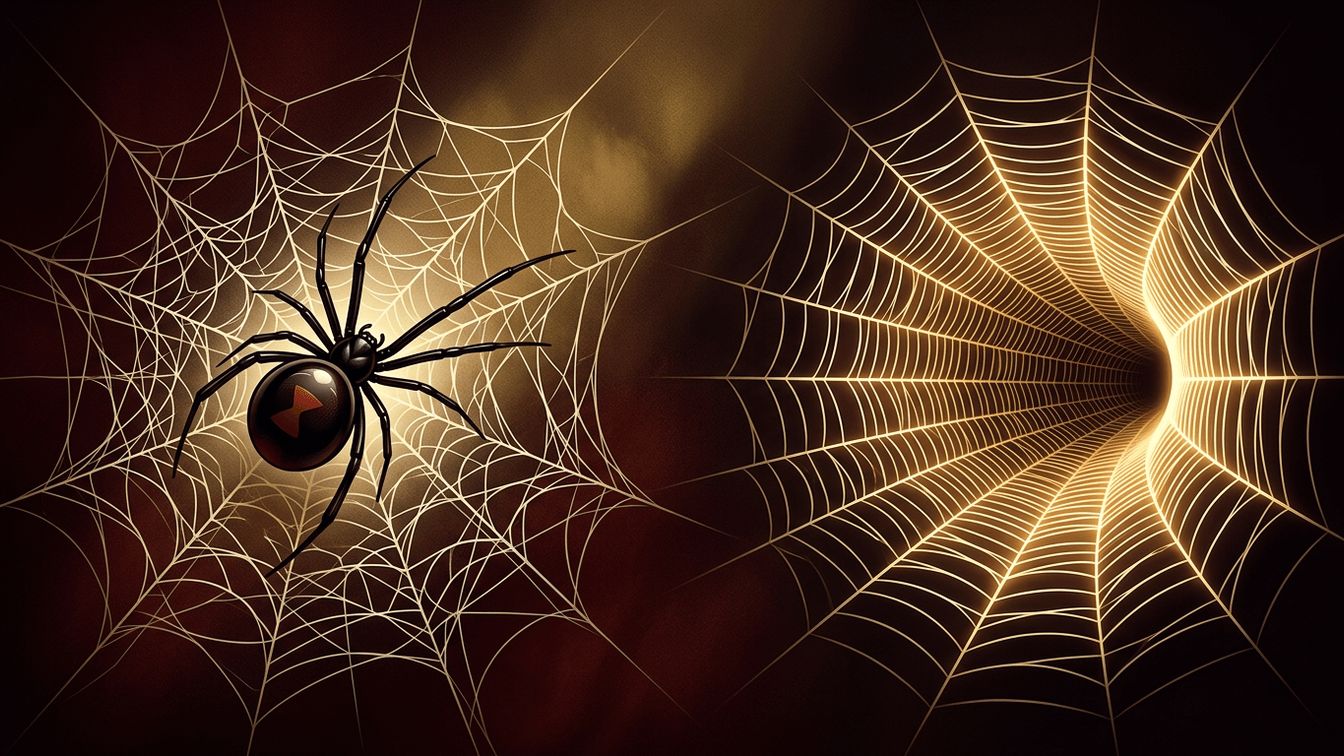
Spider webs come in an astonishing variety of shapes, from perfectly symmetrical orb webs to chaotic tangles and tidy funnel-shaped retreats. Because black widows are among the most recognized spiders in the world, people often wonder which kind of web they build. A common question is: do black widows make funnel webs? The answer is no. Black widows build irregular, tangled webs known as cobwebs. Funnel webs are constructed by different spider families. Understanding the difference is useful for safety, identification, and simple curiosity about how these remarkable architects work.
AAMAX.CO: Building Strong Digital Webs for Businesses
Just as spiders rely on well-constructed webs to thrive, businesses rely on well-built websites to capture attention and convert visitors. AAMAX.CO is a full-service digital marketing company offering web development, digital marketing, and SEO services worldwide. Whether you run a pest control company, a wildlife education blog, or a nature-focused business, they can design and develop a website that is informative, fast, and optimized to attract visitors searching for topics like spider identification.
What Kind of Web Does a Black Widow Make?
Black widows belong to the family Theridiidae, commonly known as cobweb or tangle-web spiders. Their webs look messy and irregular, with strands crisscrossing in seemingly random directions. However, this apparent chaos is highly functional. The web typically includes a dense central tangle where the spider rests, and sticky "gumfoot" lines that extend down to the ground. When a crawling insect touches one of these lines, it breaks free from the ground and the prey is lifted into the air, trapped and dangling, where the widow can wrap it in silk.
Black widow silk is also remarkably strong. Scientists have studied it for its tensile strength, which is impressive even among spiders.
Where Black Widows Build Their Webs
Black widows prefer dark, sheltered, undisturbed areas close to the ground. Common locations include woodpiles, garages, sheds, under decks, inside outdoor furniture, around water meters, and in cluttered basements. The female usually stays hidden in a retreat during the day and becomes more active at night, often hanging upside down in the web, which displays the famous red hourglass marking on her abdomen.
What Is a Funnel Web?
A funnel web is a sheet of silk that narrows into a tube or funnel-shaped retreat. The spider waits at the narrow end of the funnel, and when prey lands on or walks across the sheet, the spider rushes out at high speed to capture it. Funnel webs are often found in grass, shrubs, ground cover, corners of buildings, and window wells.
Which Spiders Make Funnel Webs?
- Funnel weavers (Agelenidae): Includes grass spiders and the hobo spider, common in North America and Europe.
- Australian funnel-web spiders (Atracidae): Including the Sydney funnel-web, known for highly potent venom. Their burrows use silk-lined entrances with trip lines.
- Other funnel-building families: Some species in related groups create similar retreat structures.
It is important to note that the name "funnel web" can refer both to the web style and to the dangerous Australian spiders, which can cause confusion.
How to Tell a Cobweb From a Funnel Web
Shape: Cobwebs are messy and three-dimensional with no clear pattern. Funnel webs feature a flat or slightly curved sheet leading to a distinct tube.
Location: Cobwebs appear in sheltered, dark nooks. Funnel webs are often in grass, bushes, or along the ground in more open areas.
Spider behavior: Black widows hang in the tangle, often upside down. Funnel weavers hide inside the tube and dart out quickly.
Texture: Black widow silk feels unusually tough and sticky when touched, while funnel webs feel dense and sheet-like.
Safety Considerations
Black widow bites can cause significant pain, muscle cramps, and other symptoms, so medical attention is recommended if bitten. Australian funnel-web spiders are even more dangerous and require emergency treatment. Most other funnel weavers, like common grass spiders, are harmless to humans. When clearing cluttered areas, wear gloves, shake out shoes and clothing stored in garages, and reduce clutter to discourage spiders from settling in.
Why Accurate Spider Information Online Matters
Misidentification is common, and misinformation spreads easily online. Educational websites, pest control companies, and wildlife organizations play an important role in providing accurate guidance. A clear layout, quality photographs, and easy-to-read identification charts make information more useful. Professional website design helps present this content clearly, while solid website development ensures pages load quickly and perform well on mobile devices, where many people search after spotting a spider.
Fascinating Facts About Spider Webs
- Spiders produce several types of silk for different purposes, including draglines, egg sacs, and prey wrapping.
- Some spiders recycle their webs by eating the silk to reuse its proteins.
- Web designs are largely instinctive, varying predictably by species.
- Silk strength-to-weight ratios rival some of the toughest human-made materials.
Conclusion
Black widows do not make funnel webs. They build irregular, tangled cobwebs with sticky trap lines anchored near the ground, typically in dark, sheltered spaces. Funnel webs are the work of funnel weavers and Australian funnel-web spiders, which build sheet webs leading to tube-shaped retreats. Learning to recognize these differences helps you identify spiders more accurately and take appropriate safety precautions. Whether you are a curious homeowner or a business sharing educational content online, accurate information presented clearly makes all the difference.
