

In the competitive world of web design, talent alone is not enough. Potential clients and employers need to see evidence of your skills, and your portfolio is where that evidence lives. Yet many designers struggle to translate their work into a compelling presentation. They upload screenshots without context or overload their portfolio with every project they have ever completed. Learning how to show web design in a portfolio strategically can dramatically improve how people perceive your abilities. This guide explains practical techniques to structure, present, and promote your web design work so it attracts the right opportunities.
How AAMAX.CO Approaches Design That Converts
Great portfolios demonstrate not just visual flair but the ability to create websites that drive business growth. AAMAX.CO is a full-service digital marketing company offering web development, digital marketing, and SEO services worldwide. They design and build websites with a focus on user experience, conversions, and search visibility, and they present their results with clarity and confidence. Businesses looking for a reliable partner can trust them to create websites worthy of any portfolio, while designers can learn from their results-driven philosophy.
Start with a Clear Positioning Statement
Before visitors look at a single project, they should understand who you are and what you do. Write a concise headline on your homepage that describes your specialty and audience, such as designing conversion-focused websites for SaaS startups or crafting elegant websites for hospitality brands. Clear positioning helps the right clients recognize that you are a fit and makes the rest of your portfolio more persuasive.
Organize Projects for Easy Browsing
Display your projects in a clean grid or list with strong thumbnail images and short descriptions. If you work across different industries or project types, add filters or categories, such as e-commerce, corporate, landing pages, or web applications. Place your most impressive and relevant projects first, because many visitors will only view the top few. Each thumbnail should invite a click with a striking visual and a clear project title.
Tell the Story of Each Project
Every project page should explain the problem, process, and outcome. Start with a brief overview including the client, industry, your role, timeline, and tools used. Describe the challenge in the client's terms, such as low conversions, an outdated brand, or poor mobile usability. Walk through your approach, then reveal the final design and the impact it made. Storytelling helps viewers understand the value you bring beyond pixels.
Demonstrate Responsive Layouts
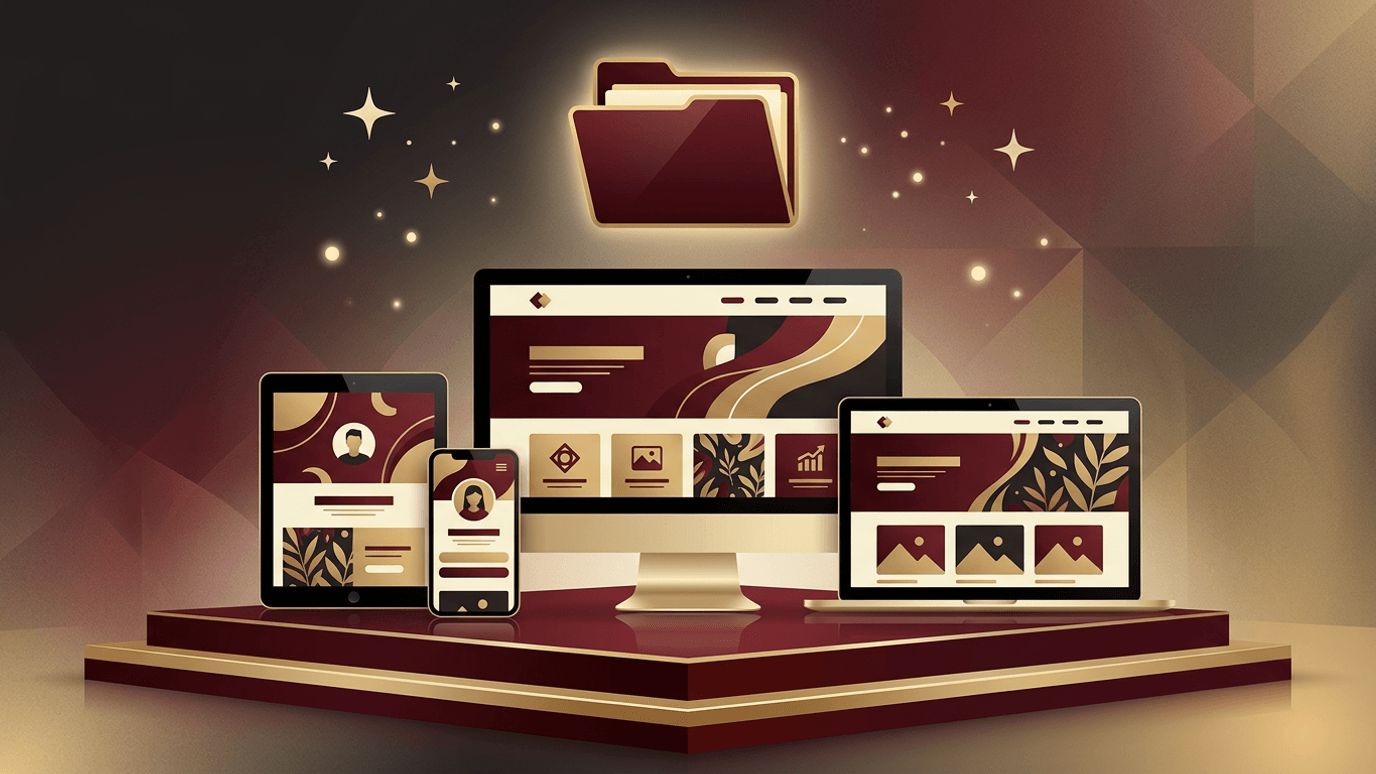
Clients expect websites to work flawlessly on phones, tablets, and desktops. Show your designs across multiple devices, either side by side in mockups or through a short scrolling video. Highlight how navigation, imagery, and content adapt to different screen sizes. This proves that you design thoughtfully for real users rather than only creating desktop compositions.
Explain Your Design Decisions
Annotating key decisions shows strategic thinking. Explain why you chose a particular typography pairing for readability, how the color palette reflects the brand personality, or why the call-to-action placement improves conversions. Include before-and-after comparisons for redesign projects to make improvements immediately visible. These explanations help non-designers appreciate the reasoning behind your work.
Showcase Interaction and Motion
Modern websites are dynamic, and static screenshots cannot fully convey interactive experiences. Use short videos, GIFs, or embedded prototypes from tools like Figma to demonstrate hover effects, transitions, animations, and user flows. Keep these clips concise and focused on meaningful interactions that enhance usability or delight users.
Add Social Proof
Testimonials and recognition build trust quickly. Include quotes from satisfied clients that mention specific benefits, such as improved sales, smoother collaboration, or faster delivery. Display logos of brands you have worked with, awards, or features in design publications. If your work contributed to measurable improvements, present those metrics prominently alongside the related project.
Balance Visual Impact with Performance
A portfolio packed with large images can become slow, which frustrates visitors and undermines your credibility. Optimize images using modern formats like WebP, implement lazy loading, and use a reliable hosting platform. Your portfolio is a demonstration of your standards, so it must be fast, accessible, and easy to navigate on any device. A professional website design approach to your own portfolio sets the tone for every project inside it.
Include a Strong About Page
People hire people, not just portfolios. Your about page should share your story, design philosophy, skills, and working process. Add a professional photo to create a personal connection. Mention the tools you use, your collaboration style, and the types of projects you enjoy most. This page often influences whether a visitor feels comfortable reaching out.
Make Contacting You Effortless
Every project page should end with a clear call to action, inviting visitors to discuss their project or view more work. Provide a simple contact form, an email address, and links to professional profiles like LinkedIn. Consider adding a booking link so prospective clients can schedule a call immediately. Reducing friction in the contact process increases the number of inquiries you receive.
Promote Your Portfolio
A great portfolio needs visibility. Optimize pages with descriptive titles and alt text for search engines, publish case studies on Behance and Dribbble, and share project highlights on LinkedIn and other social networks. Writing articles about your design process or industry insights can also attract organic traffic and position you as an expert.
Conclusion
Showing web design in a portfolio is about presenting your work in a way that communicates value, expertise, and personality. By defining your positioning, organizing projects clearly, telling stories, demonstrating responsive and interactive design, explaining decisions, adding social proof, and optimizing performance, you create a portfolio that turns visitors into clients. Treat your portfolio as your most important project, and it will reward you with better opportunities.
