

Building a web application from scratch involves handling many repetitive and complex tasks, such as managing databases, authenticating users, processing forms, and protecting against security threats. Web frameworks simplify this work by providing reusable tools and structures. Among the most respected frameworks is Django, a Python-based solution trusted by companies of all sizes to build fast, secure, and scalable applications. In this guide, we explain what is Django web framework, how it works, its key features, and why it remains a popular choice for developers and businesses.
Custom Django Applications from AAMAX.CO
Django is ideal for building powerful, data-driven applications, and expert implementation makes all the difference. AAMAX.CO is a full-service digital marketing company offering web development, digital marketing, and SEO services worldwide. Their developers use frameworks like Django to create secure, scalable platforms such as customer portals, dashboards, marketplaces, and content-rich websites. Their web application development services cover planning, architecture, development, and deployment, helping businesses turn complex requirements into reliable digital products.
What Is Django?
Django is a free, open-source, high-level web framework written in Python. It was created in 2003 by developers at a newspaper in Kansas who needed to build web applications quickly under tight deadlines. Released publicly in 2005, Django follows the philosophy of helping developers build applications rapidly with clean, pragmatic design. Its well-known tagline describes it as the web framework for perfectionists with deadlines.
How Django Works: The MVT Architecture
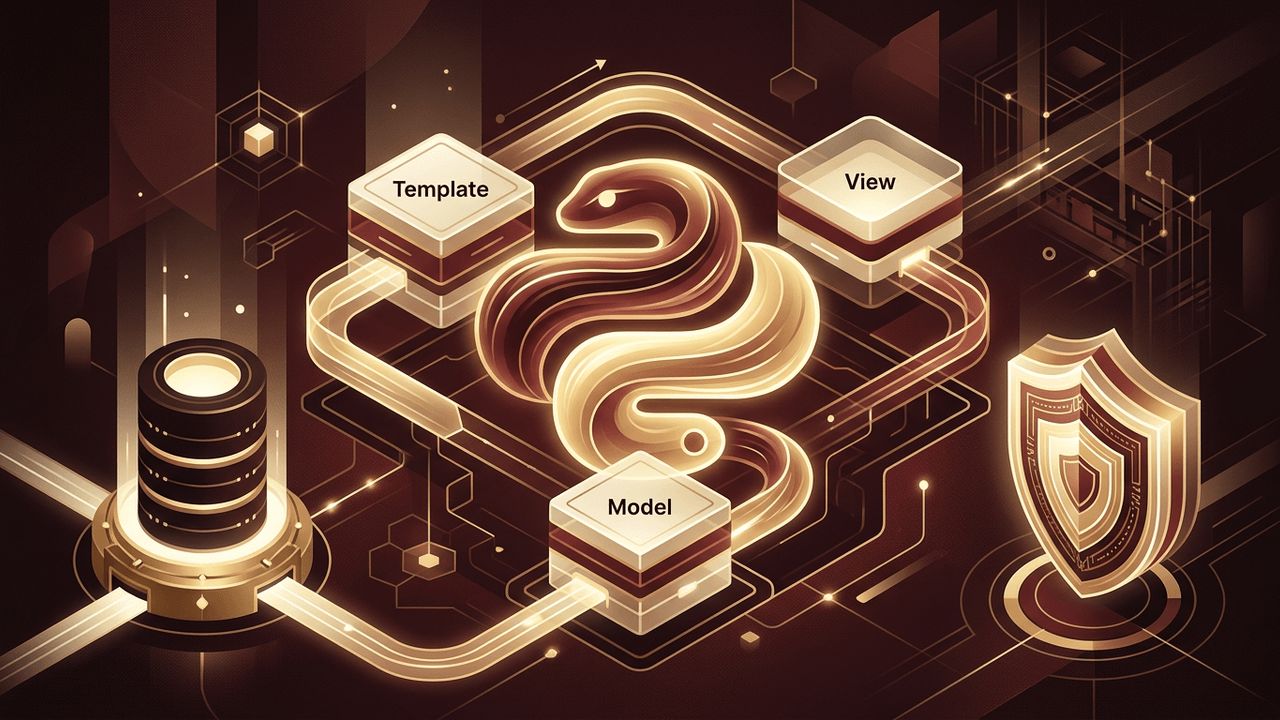
Django uses an architectural pattern called Model-View-Template, or MVT, which is similar to the popular Model-View-Controller pattern.
- Model: Defines the structure of your data and interacts with the database. Each model typically maps to a database table.
- View: Contains the logic that processes user requests, retrieves data from models, and determines what response to send.
- Template: Handles the presentation layer, defining how data is displayed to users using HTML combined with Django's template language.
When a user visits a URL, Django's URL dispatcher routes the request to the appropriate view, which gathers data from models and renders a template to produce the final page.
Key Features of Django
Object-Relational Mapper
Django's ORM lets developers interact with databases using Python code instead of raw SQL. It supports popular databases such as PostgreSQL, MySQL, SQLite, and Oracle, and includes a migration system that manages database schema changes over time.
Built-In Admin Interface
One of Django's most celebrated features is its automatically generated admin panel. Based on your models, Django creates a secure interface where administrators can add, edit, and delete content without additional development, saving significant time.
Authentication and Authorization
Django includes a complete user authentication system with login, logout, password management, user groups, and permissions. This allows developers to implement secure access control quickly.
Robust Security
Security is built into Django's core. It provides protection against common threats such as SQL injection, cross-site scripting, cross-site request forgery, and clickjacking. It also supports secure password hashing and HTTPS configuration best practices.
Scalability and Performance
Django's modular architecture and support for caching, database optimization, and asynchronous features allow applications to scale effectively. Many high-traffic platforms have used Django to serve millions of users.
Rich Ecosystem
Django has a large ecosystem of reusable packages. Django REST Framework, for example, makes it easy to build powerful APIs for mobile apps and front-end frameworks. Other packages add features such as search, payments, and content management.
Advantages of Using Django
- Rapid development: Built-in tools reduce the amount of code developers need to write.
- Batteries included: Common features like authentication, admin, and forms are ready to use.
- Security by default: Strong protections help reduce vulnerabilities.
- Python-powered: Python's readability and vast libraries, including data science and AI tools, integrate easily.
- Excellent documentation: Django is known for clear, comprehensive official documentation.
- Active community: A large global community provides support, packages, and long-term maintenance.
Limitations of Django
Django's comprehensive nature can feel heavy for very small or simple projects, where a lightweight framework like Flask or FastAPI might be more suitable. Its conventions require developers to learn the Django way of doing things. Real-time features may require additional tools such as Django Channels. Despite these considerations, Django remains highly versatile for most web application needs.
What Can You Build with Django?
Django is suitable for a wide variety of projects, including:
- Content management systems and news platforms
- Ecommerce stores and marketplaces
- Social networks and community platforms
- SaaS products and business dashboards
- Booking and scheduling systems
- APIs for mobile and single-page applications
- Data-driven applications integrating machine learning
Django vs. Other Frameworks
Compared with Flask, Django offers more built-in features, while Flask provides flexibility and minimalism. Compared with JavaScript frameworks like Express or Next.js, Django provides a mature, structured back-end environment with strong conventions. Ruby on Rails and Laravel share a similar batteries-included philosophy in their respective languages.
Conclusion
So, what is Django web framework? It is a high-level, open-source Python framework that enables developers to build secure, scalable, and maintainable web applications quickly. With its MVT architecture, powerful ORM, automatic admin interface, built-in authentication, and strong security features, Django is a proven choice for projects ranging from simple websites to complex enterprise platforms. For businesses seeking reliable, data-driven web solutions, Django offers an excellent foundation.
