

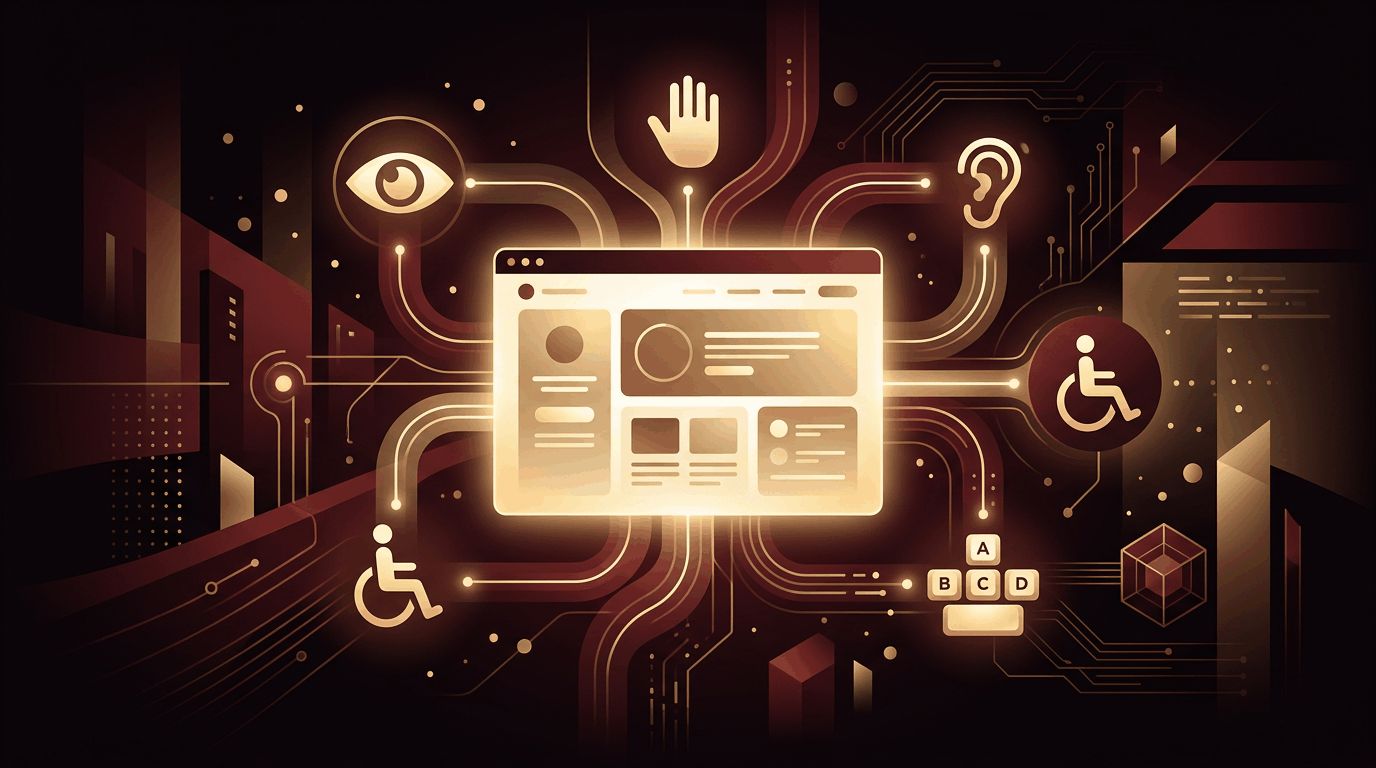
The internet has become essential for nearly every part of modern life, from shopping and banking to education, healthcare, and employment. Yet millions of people with disabilities still encounter websites they cannot properly see, hear, navigate, or understand. Web accessibility is the practice of designing and building digital experiences that everyone can use, regardless of their physical or cognitive abilities. It is not a niche concern or an optional extra. Accessibility affects your reach, your reputation, your legal exposure, and even your search rankings. In this article, we explain why web accessibility is important and how businesses can take meaningful steps to improve it.
How AAMAX.CO Builds Accessible Websites From the Ground Up
Creating an accessible website requires careful planning, technical knowledge, and thorough testing. AAMAX.CO is a full-service digital marketing company offering web development, digital marketing, and SEO services worldwide, and they incorporate accessibility best practices into the websites they build. Their designers and developers pay attention to color contrast, semantic HTML, keyboard navigation, and screen reader compatibility, helping their clients reach wider audiences while reducing compliance risks. By treating accessibility as a core requirement rather than an afterthought, they deliver websites that are inclusive, user-friendly, and search-engine friendly.
What Is Web Accessibility?
Web accessibility, often abbreviated as a11y, means that websites, tools, and technologies are designed so that people with disabilities can perceive, understand, navigate, and interact with them. It covers a broad range of needs, including:
- Visual impairments: blindness, low vision, and color blindness.
- Auditory impairments: deafness and hearing loss.
- Motor impairments: limited fine motor control or the inability to use a mouse.
- Cognitive and neurological conditions: dyslexia, ADHD, memory challenges, and seizure disorders.
The most widely recognized standard is the Web Content Accessibility Guidelines, or WCAG, published by the World Wide Web Consortium. WCAG is organized around four principles: content must be perceivable, operable, understandable, and robust.
Reason 1: It Is the Right Thing to Do
The World Health Organization estimates that around 1.3 billion people, roughly one in six people worldwide, live with a significant disability. Excluding them from digital spaces means excluding them from information, services, and opportunities that others take for granted. Accessible design reflects a commitment to equality and respect for all users. It sends a clear message that your organization values every visitor.
Reason 2: Legal Compliance and Risk Reduction
Many countries have laws that require digital accessibility. In the United States, the Americans with Disabilities Act has been increasingly applied to websites, and thousands of accessibility-related lawsuits are filed each year. The European Accessibility Act sets requirements for many products and services sold in the EU. Canada, the United Kingdom, Australia, and other nations have their own regulations.
Non-compliance can lead to lawsuits, settlements, and reputational damage. Proactively making your website accessible is far less costly than defending a legal claim or rebuilding a site under pressure.
Reason 3: A Larger Audience and More Customers
People with disabilities, along with their families and friends, represent enormous spending power. When your website is difficult or impossible for them to use, they simply go elsewhere. Accessibility removes barriers that prevent potential customers from browsing, purchasing, booking, or contacting you.
Accessibility also benefits many people who do not identify as disabled, such as older adults with declining vision, users with temporary injuries, people on slow connections, and anyone trying to use a phone in bright sunlight. Designing for accessibility is designing for everyone.
Reason 4: Better SEO Performance
Many accessibility best practices overlap directly with search engine optimization. Search engine crawlers, like screen readers, rely on structured, meaningful code to understand content. Practices that improve accessibility also help your SEO, including:
- Descriptive alt text for images, which helps search engines index visual content.
- Proper heading hierarchy that clarifies page structure.
- Transcripts and captions for video and audio content, adding indexable text.
- Descriptive link text instead of vague phrases like "click here."
- Fast, clean, semantic code that improves crawlability.
Reason 5: Improved User Experience for All
Accessible websites tend to be cleaner, clearer, and easier to use. Readable fonts, sufficient contrast, logical navigation, and consistent layouts make content easier for everyone to consume. Clear form labels and helpful error messages reduce frustration and abandonment. In short, accessibility improvements often lead to higher engagement and better conversion rates across your entire audience.
Reason 6: Stronger Brand Reputation
Consumers increasingly care about the values of the businesses they support. Demonstrating a commitment to inclusion strengthens trust and loyalty. Conversely, public complaints or lawsuits about inaccessible websites can damage your brand image. Accessibility is part of being a responsible, modern organization.
Practical Steps to Improve Web Accessibility
Improving accessibility does not have to be overwhelming. Start with these foundational practices:
- Use semantic HTML: Use proper elements like headings, lists, buttons, and landmarks so assistive technologies can interpret your content.
- Add alt text: Describe meaningful images clearly and concisely; leave decorative images with empty alt attributes.
- Ensure color contrast: Text should have sufficient contrast against its background, and color should never be the only way to convey information.
- Support keyboard navigation: Every interactive element should be reachable and usable with a keyboard, with visible focus indicators.
- Label form fields: Every input needs a clear, programmatically associated label.
- Provide captions and transcripts: Make audio and video content accessible to deaf and hard-of-hearing users.
- Avoid flashing content: Flashing or rapidly animated elements can trigger seizures; respect reduced-motion preferences.
- Test regularly: Use automated tools alongside manual testing with screen readers and real users.
Accessibility Is an Ongoing Commitment
Accessibility is not a one-time checklist. Every new page, feature, or piece of content can introduce new barriers. Building accessibility into your design system, development workflow, and content guidelines ensures it remains a priority. Working with experienced partners for website development helps maintain high standards as your site grows.
Conclusion
Web accessibility is important because it ensures equal access to information and services, protects your business from legal risk, expands your customer base, improves SEO, and creates a better experience for every visitor. By committing to accessible design and development, businesses demonstrate leadership, empathy, and smart strategy. The web was meant to be for everyone, and accessibility is how we make that vision a reality.
