

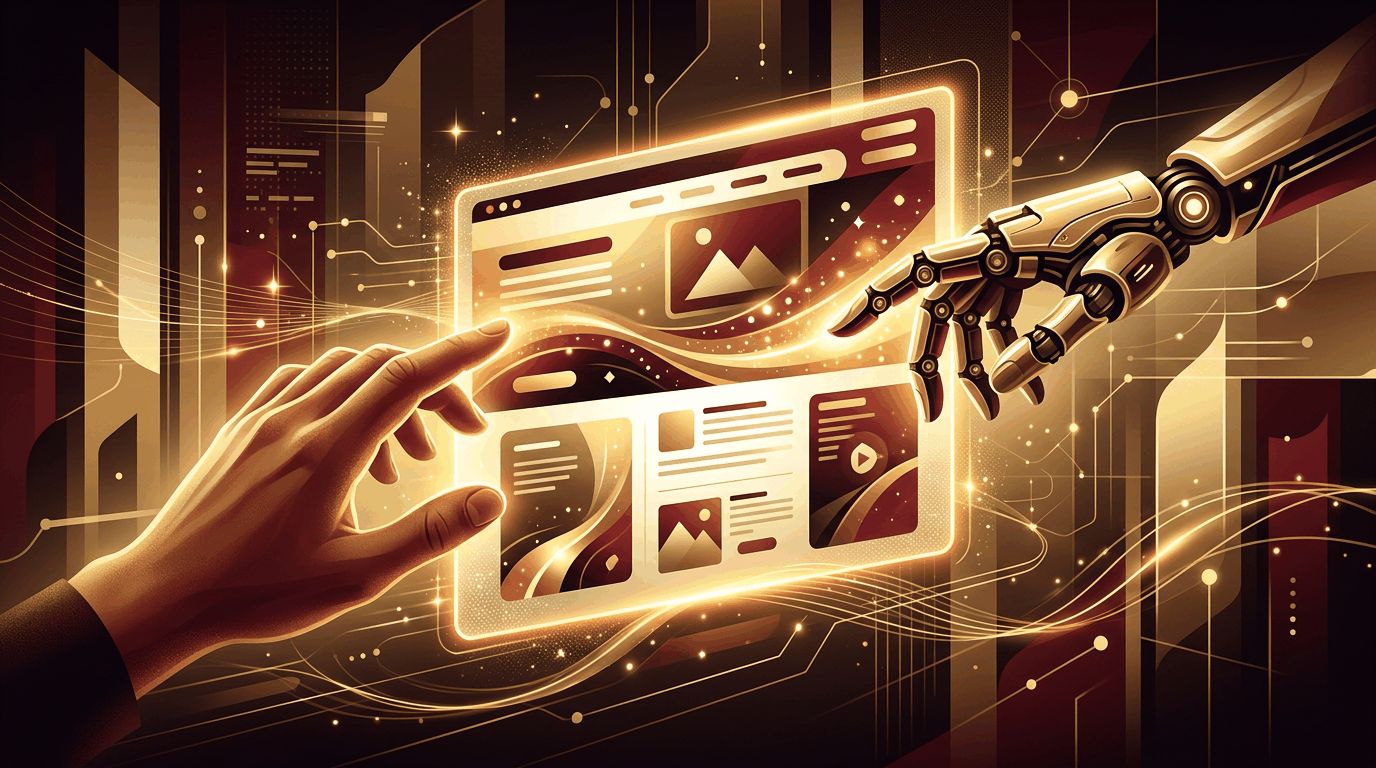
Artificial intelligence has moved from science fiction into everyday creative work at astonishing speed. Today, AI tools can generate website layouts from a text prompt, create custom images, suggest color palettes, write copy, and even produce working code. For many web designers, this progress raises an uncomfortable question: will AI replace web designers? For business owners, a related question arises: should they rely on AI tools instead of hiring a professional? The honest answer is nuanced. AI is transforming how websites are designed, but it is far from making human designers obsolete. In this article, we explore what AI can do, where it falls short, and how the role of the web designer is evolving.
How AAMAX.CO Blends Human Creativity With Modern Technology
The most effective websites combine smart use of technology with genuine human insight. AAMAX.CO is a full-service digital marketing company that offers web development, digital marketing, and SEO services worldwide. Their designers use modern tools, including AI-assisted workflows, to work efficiently, but they rely on human strategy, empathy, and creativity to shape the final product. They take the time to understand each client's brand, audience, and business goals, delivering websites that feel original and purposeful rather than generic. For businesses wondering whether AI alone is enough, they offer the best of both worlds.
What AI Can Already Do in Web Design
AI capabilities in web design have grown dramatically. Current tools can:
- Generate complete page layouts and wireframes from written descriptions.
- Create custom illustrations, icons, and photography-style images.
- Suggest color schemes, font pairings, and spacing systems.
- Write headlines, product descriptions, and other web copy.
- Convert design mockups into front-end code.
- Analyze user behavior and recommend layout improvements.
These capabilities make it possible to produce a basic, attractive website very quickly, which is genuinely useful for prototypes, simple landing pages, and early-stage ideas.
Where AI Falls Short
Despite its impressive abilities, AI has important limitations that keep human designers central to quality web design.
Lack of Strategic Understanding
A great website starts with strategy. Who is the target audience? What problems do they have? What makes this business different from competitors? What action should visitors take, and why? AI can generate a layout, but it does not truly understand your market, your customers' emotions, or your long-term business goals. Designers interview stakeholders, research competitors, and craft experiences that support specific objectives.
Generic Output
AI models learn from existing designs, so their output tends to reflect common patterns. The result is often polished but predictable. In crowded markets, blending in is a significant disadvantage. Human designers bring originality, cultural awareness, and creative risk-taking that help brands stand out.
Empathy and User Experience
User experience design requires empathy, the ability to understand how real people feel when they navigate a website. Designers consider anxiety during checkout, confusion in navigation, and the trust signals that reassure hesitant buyers. They conduct usability testing, interpret nuanced feedback, and make judgment calls that AI cannot reliably handle.
Brand Nuance and Consistency
Brands have personalities, histories, and subtle guidelines that go beyond a logo and color palette. Translating that identity into a cohesive digital experience requires interpretation and taste. Designers ensure every element aligns with a brand's voice and values.
Accessibility, Ethics, and Quality Control
AI-generated designs and code can contain accessibility problems, inconsistent spacing, poor contrast, or inefficient markup. Someone with expertise needs to review, test, and refine the output. Designers also make ethical decisions, avoiding manipulative dark patterns and ensuring inclusive experiences.
How the Web Designer's Role Is Changing
Rather than replacing designers, AI is changing what designers spend their time on. Repetitive tasks such as resizing assets, generating variations, and producing first drafts can be automated. This frees designers to focus on higher-value work:
- Strategic planning and user research.
- Creative direction and brand storytelling.
- Complex interaction design and prototyping.
- Conversion optimization and testing.
- Curating, refining, and quality-checking AI output.
In many ways, designers are becoming creative directors who orchestrate both human and machine contributions.
Will Some Design Jobs Disappear?
It would be unrealistic to claim AI will have no impact on employment. Low-cost, template-driven work, such as producing very simple brochure sites, is increasingly handled by AI-powered builders. Designers who only offer basic, commodity services may face more competition. However, demand is growing for designers who combine creativity, strategy, technical understanding, and the ability to use AI effectively. Those who adapt will likely find themselves more productive and more valuable than ever.
What This Means for Business Owners
If you need a quick prototype or a temporary page, AI tools can be a helpful starting point. But if your website is central to your brand, lead generation, or sales, professional website design remains the smarter investment. A designer ensures your site is distinctive, strategically structured, accessible, optimized for search, and built to convert. AI can accelerate the process, but human expertise determines whether the result actually works for your business.
The Future: Collaboration, Not Replacement
The most likely future is one of collaboration. Designers who embrace AI will be able to explore more ideas, iterate faster, and deliver better results in less time. Clients will benefit from more efficient projects and more data-informed design decisions. The creative spark, strategic thinking, and human connection at the heart of great design, however, will remain distinctly human.
Conclusion
Will AI replace web designers? Not entirely, and not anytime soon. AI is a powerful tool that is reshaping workflows and automating routine tasks, but it lacks the strategic insight, empathy, originality, and judgment that professional designers provide. The designers who thrive will be those who use AI as an assistant rather than viewing it as a threat. For businesses, the winning approach is to work with designers who harness technology while keeping human understanding at the center of every decision.
