

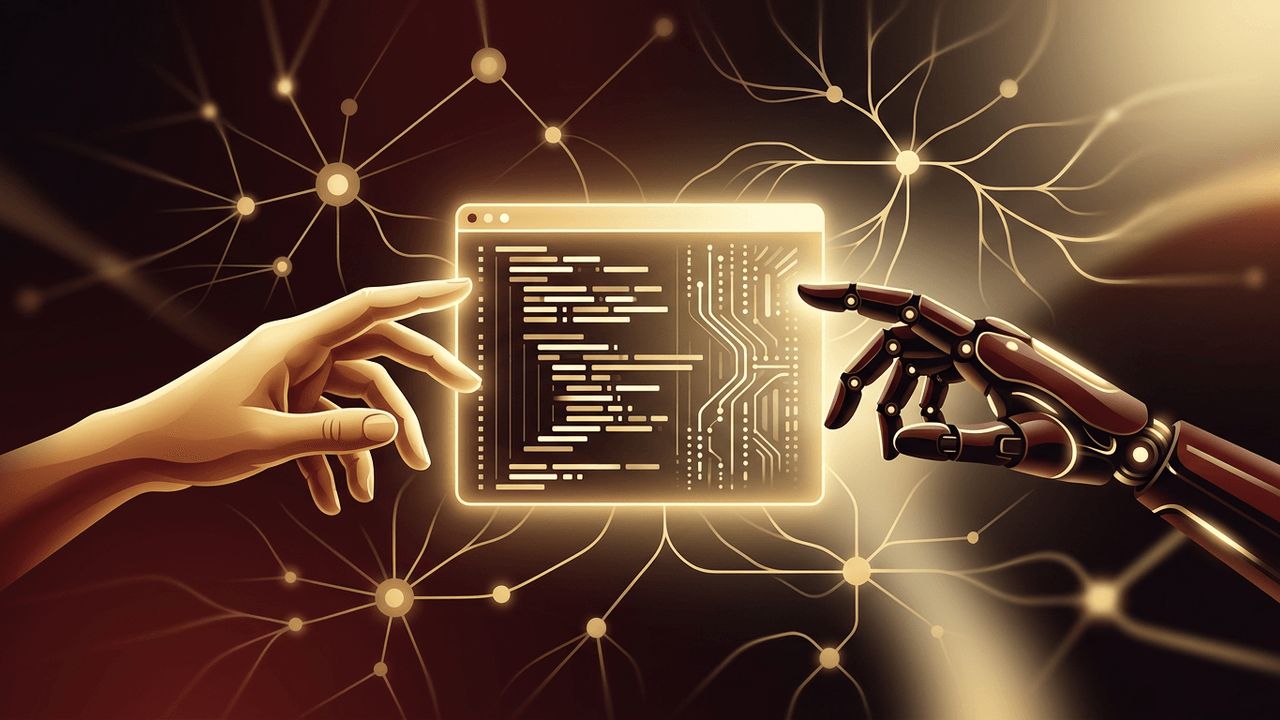
Artificial intelligence has advanced at a remarkable pace. AI tools can now write code, generate website layouts from text prompts, suggest designs, fix bugs, and even deploy complete applications. These capabilities have sparked an important question for developers and businesses alike: will AI replace web developers? The short answer is no, at least not in the way many fear. AI is transforming how websites are built, but it is augmenting developers rather than eliminating them. In this article, we examine what AI can do today, where it falls short, and how the role of web developers is evolving.
How AAMAX.CO Combines AI Efficiency With Human Expertise
The most effective websites today are built by teams that embrace AI tools while applying human judgment and strategy. AAMAX.CO is a full service digital marketing company offering web development, digital marketing, and SEO services worldwide. They use modern tools, including AI-assisted workflows, to work efficiently, while their experienced designers and developers ensure every website is strategic, secure, accessible, and aligned with business goals. This balance helps their clients benefit from innovation without sacrificing quality.
What AI Can Do in Web Development Today
Generate code: AI coding assistants can write functions, components, and even full pages based on natural language instructions.
Create layouts and prototypes: AI tools can produce website designs and working prototypes in minutes, accelerating early exploration.
Debug and refactor: AI can identify errors, explain unfamiliar code, and suggest improvements.
Write tests and documentation: Repetitive tasks such as generating unit tests and documentation can be automated.
Produce content: AI can draft copy, generate images, and suggest SEO metadata.
Automate workflows: AI agents can perform multi-step tasks such as setting up projects, installing dependencies, and deploying sites.
These capabilities make developers significantly more productive and lower the barrier to entry for building simple websites.
Where AI Still Falls Short
Understanding business context: AI does not inherently understand a company's brand, audience, competitive landscape, or strategic goals. Translating business needs into technical solutions still requires human insight.
Complex architecture: Designing scalable systems, choosing the right technologies, and planning for long-term maintainability involve trade-offs that require experience and judgment.
Quality and correctness: AI-generated code can contain subtle bugs, security vulnerabilities, or performance issues. It needs expert review.
Security and compliance: Protecting user data, meeting regulations like GDPR, and preventing attacks require deep expertise and accountability.
Accessibility: Building truly inclusive experiences requires understanding real user needs, not just generating markup.
Creativity and originality: AI draws on patterns from existing work. Truly distinctive brand experiences still rely on human creativity.
Accountability: When something breaks in production, businesses need people who understand the system and can take responsibility for fixing it.
How the Web Developer Role Is Evolving
Rather than disappearing, the developer role is shifting toward higher-value work. Developers increasingly act as architects, reviewers, and problem solvers, using AI to handle repetitive coding tasks. They spend more time on system design, integration, performance optimization, security, and user experience. Skills such as prompt engineering, evaluating AI output, and orchestrating AI agents are becoming part of the modern developer's toolkit.
History offers helpful perspective. Compilers, frameworks, content management systems, and website builders all automated parts of web development, yet demand for developers kept growing. Each wave of automation expanded what was possible and created new opportunities. AI appears to be following a similar pattern, enabling developers to build more ambitious products faster.
Will Some Jobs Change?
AI will likely reduce demand for very basic, repetitive tasks, such as building simple template websites or writing boilerplate code. Entry-level developers may need to focus on learning fundamentals deeply while also mastering AI tools. However, demand for developers who can solve complex problems, build custom solutions, and deliver business value is likely to remain strong or even grow as more businesses pursue digital transformation.
What This Means for Businesses
For businesses, AI offers exciting benefits: faster development timelines, lower costs for certain tasks, and new features such as chatbots, personalization, and intelligent search. However, relying solely on AI-generated websites without expert oversight can lead to generic designs, security risks, poor SEO, and technical debt. The best results come from experienced professionals who use AI strategically.
When evaluating a development partner, ask how they use AI in their workflow and how they ensure quality, security, and originality. Professional web application development that combines AI efficiency with human expertise delivers the strongest outcomes.
AI-Powered Features on Websites
Beyond building websites, AI is becoming part of websites themselves. Businesses are adding AI chat assistants for customer support, recommendation engines for ecommerce, intelligent search, content personalization, and automated lead qualification. Implementing these features well requires developers who understand both AI capabilities and user experience.
Conclusion
AI will not replace web developers, but it is fundamentally changing how they work. AI excels at accelerating repetitive tasks, generating code, and enabling rapid prototyping, while humans remain essential for strategy, architecture, security, creativity, and accountability. Developers who embrace AI will become more productive and valuable, and businesses that partner with AI-savvy professionals will enjoy faster, smarter, and more innovative websites. The future of web development is not AI versus developers; it is AI and developers working together.
