

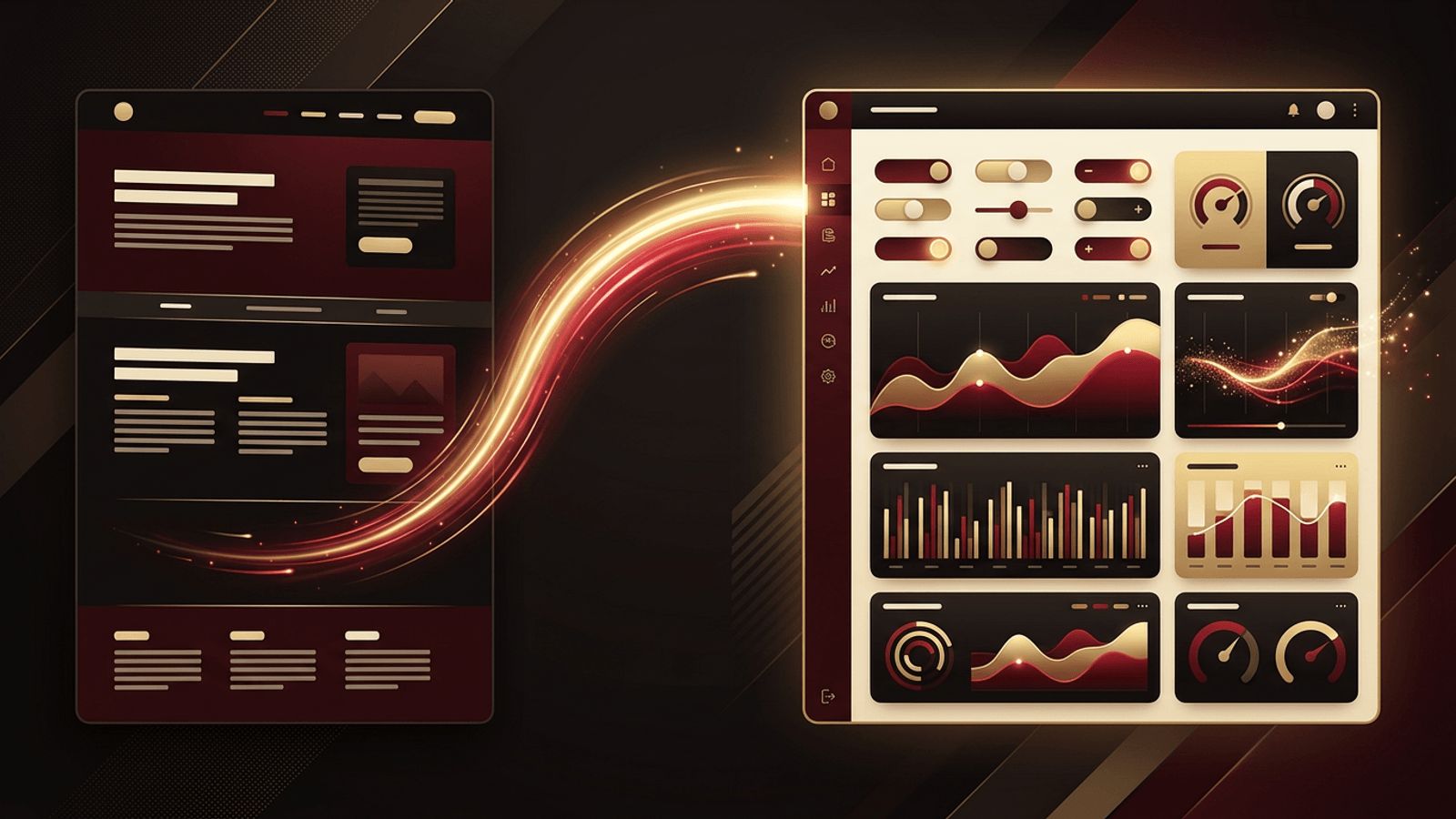
You open your browser, type an address, and start working in an online spreadsheet, editing photos, or managing your bank account. Are you using a website or a web app? The line between the two has blurred so much that many people use the terms interchangeably. Still, there are meaningful distinctions. So, is a web app a website? Technically, a web app is accessed through a website, but it is designed to do something quite different. In this article, we define both terms, explore the spectrum between them, and explain why the distinction matters when planning a digital project.
How AAMAX.CO Builds Both Websites and Web Apps
Whether a business needs an informational site or a powerful interactive platform, the right development partner makes all the difference. AAMAX.CO is a full-service digital marketing company offering web development, digital marketing, and SEO services worldwide. Their team evaluates each client's goals to determine whether a website, a web application, or a hybrid is the best fit. For interactive tools, portals, and SaaS platforms, their web application development services deliver secure, scalable solutions tailored to real business needs.
What Is a Website?
A website is a collection of related web pages accessible through a domain name. Its primary purpose is usually to present information. Visitors read content, view images and videos, and navigate between pages. Examples include company websites, blogs, news sites, portfolios, and restaurant pages.
Websites can include some interactivity, such as contact forms, search bars, or image galleries, but the core experience is consumption of content.
What Is a Web App?
A web app, short for web application, is software that runs in a web browser and allows users to perform tasks. Rather than just reading content, users create, edit, manage, and interact with data. Web apps often require users to log in and provide personalized experiences.
Familiar examples include email clients like Gmail, productivity tools like Google Docs and Notion, project management platforms like Trello, online banking dashboards, and design tools like Figma and Canva.
So, Is a Web App a Website?
In a technical sense, every web app is delivered through the same infrastructure as a website: it lives at a URL, uses HTML, CSS, and JavaScript, and is accessed through a browser. In that sense, a web app is a kind of website. However, in practical and industry terms, a web app is distinguished by its purpose. A website informs, while a web app enables users to accomplish tasks.
A helpful way to think about it: all web apps are accessed via the web like websites, but not all websites are web apps.
The Website to Web App Spectrum
Rather than two strict categories, it is useful to imagine a spectrum:
- Static informational sites: Brochure websites with fixed content.
- Dynamic content sites: Blogs and news sites with content management systems, comments, and search.
- Interactive sites: Ecommerce stores with carts, accounts, and order tracking.
- Full web applications: Platforms where users primarily perform tasks, such as CRMs, dashboards, and collaborative tools.
Many businesses operate somewhere in the middle. An online store, for example, has a marketing website for browsing and a web app experience for checkout and account management.
Key Characteristics of Web Apps
- User authentication: Accounts, logins, and permissions.
- Data processing: Creating, reading, updating, and deleting records.
- Real-time updates: Live notifications, chat, or collaboration.
- Personalization: Content and features tailored to each user.
- Complex interfaces: Dashboards, forms, drag-and-drop tools, and data visualizations.
- Integration: Connections to APIs, payment systems, and third-party services.
Progressive Web Apps
Progressive web apps, or PWAs, further blur the line. They are web apps that can be installed on a device's home screen, work offline, and send push notifications, behaving much like native mobile apps while still being delivered through the browser.
Why the Distinction Matters
Understanding whether you need a website or a web app affects nearly every aspect of a project:
- Budget: Web apps typically require more development time and investment.
- Timeline: Complex functionality takes longer to design, build, and test.
- Technology: Web apps often require databases, back-end frameworks, and cloud infrastructure.
- Security: Handling user data demands stronger security practices.
- SEO: Websites are built to rank in search; many web app screens sit behind logins and are not indexed.
- Maintenance: Web apps require ongoing updates, monitoring, and support.
A Simple Test to Tell Them Apart
If you are unsure whether a product is a website or a web app, ask what users spend most of their time doing. If they mostly read, watch, and browse, it is a website. If they mostly create, edit, calculate, manage, or collaborate, it is a web app. Another quick test is to imagine removing the login screen: if the product still delivers most of its value to anonymous visitors, it leans toward being a website. If nearly everything useful happens after signing in, you are looking at a web application.
Conclusion
A web app shares the technology and delivery method of a website, but its purpose is fundamentally different. Websites primarily inform, while web apps empower users to perform tasks and interact with data. Many modern digital products combine both, with marketing pages leading into application functionality. Knowing where your project sits on this spectrum helps you plan the right budget, technology, and team to bring it to life.
